Marketing
First Half of 2025 in Marketing: Changes and Challenges
A shake-up in SEO, the cookie deadline that got pulled back, AI as an everyday marketing tool, social commerce, and a new quality bar for advertising - see how marketing changed in the first half of 2025.
You're reading the third part of our summary of the first half of the year in business and online marketing.
You can find part one here: First Half of 2025 in E-Business: Trends, Changes, and Declines
In 2025, digital marketing is changing faster than ever before. New privacy regulations, artificial intelligence becoming part of marketers' daily work, changes in SEO, and an explosion of video on social media - all of this means companies need to work smarter, faster, and more responsibly. In this part of our summary, we look at the most important trends and changes in marketing in the first half of 2025.
AI and automation: from experiments to the standard
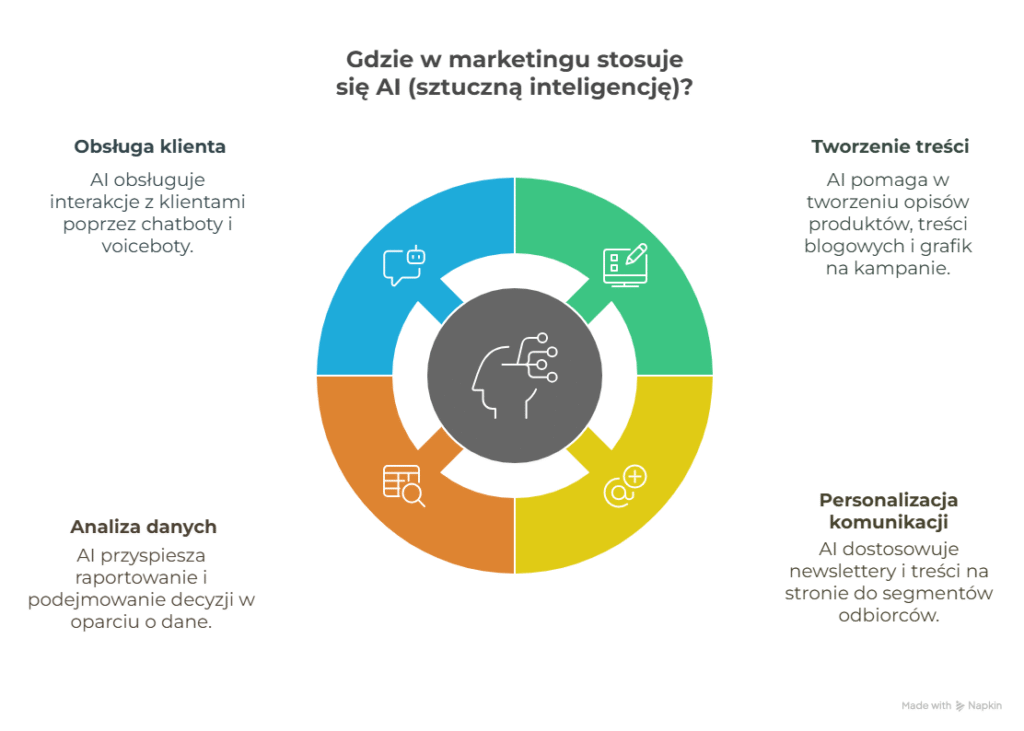
Generative AI has stopped being a novelty, and in the first half of 2025 it became an everyday tool for marketing teams. More and more companies are using language and image models to write product descriptions, blog content, campaign graphics, and even video. AI is also supporting personalization - from newsletters to dynamic on-site content tailored to a given audience segment.
AI's role in data analysis is just as significant - marketers are using it for faster reporting, drawing conclusions, and making sound decisions. In many companies, AI assistants are already part of everyday work, both in customer service (chatbots, voicebots) and in campaign planning or database segmentation. Studies show that more than half of specialists in Poland use AI when creating content, and many rate the answers generated by these models as reasonably accurate and worth using.
SEO in the age of the generative search engine
May 2025 brought one of the biggest changes in Google's history - the rollout of AI Search Mode, which is radically changing how people search for information. Instead of a classic list of links, users are increasingly getting direct answers generated by AI, synthesized from multiple sources.
This is a fundamental shift for SEO strategy. The importance of individual keywords is fading, while the value of expert content that's well-structured and directly answers users' questions is rising. Google's AI Mode evaluates not just a page's content, but also its context, the author's credibility, and how current the content is. It's also becoming increasingly important to design content so it can be cited in generative answers.
At the same time, we're seeing a shift in behavior among younger internet users, who increasingly treat TikTok, YouTube, or Instagram as search engines. That's where they look for reviews, advice, and shopping inspiration. This means optimizing video content - both for the algorithms and for its format - has now become mandatory.
What's next for SEO in the age of AI?
Changes in web search are also raising new emotions and questions among users. Many have enthusiastically embraced a more natural way of asking questions and getting answers - they no longer have to type "men's running shoes price," they can simply ask: "what running shoes for asphalt cost under $75?" This brings search closer to everyday conversation and makes it more intuitive.
On the other hand, growing uncertainty is emerging: are AI-generated answers reliable? Does the user know what sources the answer is based on? Will they still get a chance to reach a range of different perspectives, or only what the algorithm chooses to surface?
Marketers and website owners are also starting to ask themselves difficult questions. Some worry that valuable content will no longer get visited - if a user gets the answer straight from Google, why would they click through? Others see an opportunity here: since AI builds its answers on existing content, that content needs to be better than the competition's - more expert, more current, with an authentic voice behind it.
This new stage of SEO isn't just a change in algorithms - it's a change in the relationship between users and information. The winners will be those who build trust, both in the eyes of the algorithm and of real people.
Marketplaces and social commerce: sales locked inside the app
The first half of 2025 showed that the line between marketing and sales is blurring. Marketplaces and social media are increasingly acting as full-blown shopping platforms. Consumers discover a product, watch a review, compare options, and complete the purchase - all without leaving the app.
On TikTok, TikTok Shop is growing fast - a tool that combines livestreams, influencers, and instant purchasing. Allegro is developing its own advertising and remarketing tools, giving sellers more control over their campaigns. Amazon is testing solutions that let people buy a product directly from Google search results.
What used to be separate stages of the funnel now happens within a single, closed app environment. For brands, this means they need to show up where consumers not only spend their time, but also make real-time purchase decisions.
Paid advertising: rising costs, Google's change of plans, and new challenges
The cost of paid campaigns is rising - both at the click level and at the conversion level. That's the result of greater competition, changes in privacy regulations, and increasingly difficult targeting. Until recently, marketers were bracing for a revolution - the complete phase-out of third-party cookies in Chrome was planned for the second half of 2025.
In April, however, Google announced a change of course: third-party cookies will not be removed from Chrome on the planned schedule, and support for them remains active. This means that while privacy is still dominating marketing conversations, the industry has gained extra time to adapt to a more balanced advertising model. Google justified the decision by pointing to the market's lack of readiness and the lack of broad acceptance for alternatives such as Privacy Sandbox.
As a result, many companies are continuing to build a strategy based on their own data - so-called first-party data - collected directly from customer interactions. Marketers are learning to implement Google Consent Mode, apply conversion modeling, and segment users based on behavior rather than identifiers. Paid campaigns are becoming more precise, but they require a better understanding of the purchase journey and quality content.
Storytelling, polished UX, and A/B testing are all growing in importance. Automation and AI are helping optimize sales funnels, and success is measured not just in clicks, but in real value delivered to the customer.
Ethics, accessibility, and trust: a new dimension of communication
In 2025, marketing is no longer just about performance - it's also about responsibility toward users. The Polish Accessibility Act, in force since June, requires websites, content, and digital tools to be designed so they're accessible to everyone, regardless of ability. This isn't just a legal obligation - it's also part of building a brand and earning trust.
Companies are also taking the ethics of AI use more seriously - making sure automatically generated content isn't biased, doesn't mislead, and doesn't offend audiences. Users are more aware and more demanding - they expect transparency, information about how their data is processed, and a say in how a brand communicates with them.
Brands that can speak honestly, protect privacy, and communicate with users as partners are the ones earning loyalty and a real competitive edge.

Summary: marketing as a strategic advantage
The first half of 2025 confirmed that marketing today is more than just advertising. It's the strategic management of brand communication, centered on understanding the audience's needs, emotions, values, and technological habits. AI is no longer just a support tool - it has become an integral part of creative, analytical, and sales processes. But how we use it matters enormously: the goal isn't mass-producing content, it's creating messages that are authentic, engaging, and ethical.
Changes in search, the growing role of first-party data, rising expectations around accessibility and transparency, and new sales models locked inside apps - all of this means companies need to look at marketing holistically. It's becoming increasingly clear that the brands that win aren't just the ones that can reach customers, but the ones that can build a lasting, trust-based relationship with them.
Investing in quality, automation, and marketing ethics is no longer optional - it's becoming a necessity. Only then will it be possible to stay competitive in a world that changes week to week, not year to year.
Sources used:
- Poland's GDP in 2025: GUS Published New Data - Business Insider
- 2024 Summary and 2025 Forecasts: E-commerce (Part 1) - AboutMarketing.pl
- E-commerce Picks Up Speed at the Start of 2025! - Polish Chamber of Commerce
- European E-commerce Gains Momentum: Poland and Germany Among the Leaders in Online Order Growth in Q1 2025 - Ecommercenews.pl
- "Omni-commerce. Shopping Made Easy" - Polish E-commerce in 2025 - Socialpress
- Monthly Summary [May 2025] - E-commerce w Praktyce
- The Polish Accessibility Act - What Do the New Regulations Mean? - Office of the SME Ombudsman
- Changes in SEO After Google I/O 2025 - What You Need to Know - OBTK
- 2025 Marketing Trends - Opinions From 23 Industry Experts - SprawnyMarketing.pl
- Cookies Are Passé! What's Next in E-commerce Analytics When the Crumbs Run Out - E-commerce w Praktyce
Want to find out how we can help you adapt your marketing strategy to the changes taking place in 2025?
Click below or fill out the form: