Marketing
What You Need to Know Before You Start Selling on Amazon
Want to start selling on Amazon but feel like it's a world full of complications? This guide is your compass. Dive in with us and start selling like a professional!
Amazon is the most powerful e-commerce platform out there, opening the door for entrepreneurs to millions of potential customers. But getting started on Amazon takes solid preparation and a good grasp of how the platform really works. We put this article together to walk you through the most important - and sometimes not-so-obvious - aspects of the platform, and to show you how to take your first steps, avoid common mistakes, and succeed on one of the toughest, yet most rewarding, sales platforms out there.

Product research - the foundation of your success
There's one incredibly important question you need to ask yourself: what do you want to sell?
Choosing the right product is the foundation. Don't sell what you like - sell what customers are looking for. Aim for products with high potential demand and relatively low competition. Browse Amazon and look at what's currently being sold there - how can you fit into that competitive landscape, and how will you compete: on price, product quality, or functionality? If you're planning to sell something similar to a typical dropshipping product, or a highly common item, tread carefully - other sellers are most likely already selling it on Amazon. In that case, a lot comes down to price and the Buy Box - more on that shortly.
There are tools that can help you here, such as Helium 10 or Jungle Scout - these can help you identify profitable niches where you could become a leader. Analyze trends, track the competition, and run the numbers on your margins. Avoid seasonal products as your main offering - they can support your business, but shouldn't form its backbone.
FBA vs. FBM - which fulfillment model should you choose?
Choosing between FBA (Fulfillment by Amazon) and FBM (Fulfillment by Merchant) is one of the first strategic decisions you'll make. With FBA, Amazon handles the entire logistics process - from warehousing to shipping and returns. You simply send your stock to Amazon's warehouses and keep an eye on inventory levels. It's a convenient setup, especially for sellers looking to scale.
With FBM, the entire shipping process - from the customer's purchase to delivery - is on you. This gives you full control over shipping, which can be an advantage if you're selling custom or unique products.
That said, you can sell both FBA and FBM from the same Amazon account. Your choice should come down to a cost analysis and the type of products you plan to sell. Keep in mind that FBA comes with storage costs, and you'll need to keep constant tabs on your inventory. With FBM, make sure you have the capacity - and meet the relevant requirements and regulations - to actually deliver the goods to customers.
Amazon's legal requirements - don't ignore the regulations!
Since regulations have come up, you should know that selling on Amazon - especially in Europe - isn't just about marketing and product management, it's also about a fair amount of paperwork. When selling products, you need to comply with the regulations specific to that type of product, as well as general regulations such as GPSR. Amazon regularly scans the products listed on its platform and can notify you of non-compliance. In that case, you'll receive an email outlining what action Amazon has taken (usually a notice, though sometimes listings are suspended until compliance is resolved), and you'll need to provide Amazon with the relevant information (entering data in the product listing, submitting a registration number, and sometimes uploading documents).
Here are some of the regulatory requirements you need to meet:
- General Product Safety Regulation (GPSR): As of December 13, 2024, this introduces an obligation to ensure the safety of all products, provide product safety information, and designate a person responsible for the product or brand within the European Union.
- RoHS (Restriction of Hazardous Substances): Applies to electrical and electronic equipment, restricting the use of harmful substances.
- WEEE (Waste Electrical and Electronic Equipment): Requires sellers to ensure collection and recycling systems are in place for used equipment.
- Toy Safety Directive: If you sell toys, they must meet strict standards for chemical, mechanical, and flammability safety.
- REACH Regulation: Governs the use of chemicals in products, requiring registration and compliance with relevant standards.
- CE Marking: Many products sold in the EU must carry CE marking, confirming compliance with European safety standards.
- LUCID, EPR, VerpackG: Mandatory registration under producer responsibility schemes for packaging waste (particularly in Germany).
Failing to meet these requirements can result in your account being suspended and your listings removed. Keep in mind that regulations can change, so it's worth staying on top of legal updates or consulting an advisor.
Seller account registration and required paperwork
When registering on Amazon, you'll need to prepare documents confirming the individual responsible for the sales activity (the KYC process, Know Your Customer). Have things like proof of identity, utility bills, and bank details ready. During account setup, you'll also need to complete your tax profile. Providing accurate information is essential, since Amazon carries out a thorough identity verification of every seller. Remember - submitting false information is a quick way to get your account shut down.
Insurance on Amazon
Amazon requires you to hold liability insurance once your sales exceed a certain threshold. That threshold is:
- EUR 5,000 if you sell in France, Spain, the Netherlands, Germany, or Italy;
- GBP 4,000 if you sell in the United Kingdom;
- PLN 22,500 if you sell on Amazon.pl.
Once you exceed the threshold for a given marketplace, you have 30 days to take out the appropriate policy. You'll be notified by email that you need to provide proof of insurance to Amazon, and you'll find the exact coverage amount required in the agreement you signed with Amazon when registering your account.
Insurance protects both the seller and customers in the event of claims related to defective products. If you fail to meet the insurance requirement, Amazon can suspend your account - meaning your sales could be paused for several weeks or more, until the account is reinstated.
ASIN - the key identifier for your products
Set up your account and ready to start selling? Get to know ASIN (Amazon Standard Identification Number) - the product identification system used on Amazon. Every product must have a unique ASIN assigned to it; this lets Amazon standardize the products available on the platform. When adding your listing, you can therefore find an existing ASIN for your product (say, a toothbrush), and... you're done! The description, specifications, and even photos are already filled in. All that's left is to set your price and fulfillment method (FBA or FBM), publish the listing, and start selling.
When adding new products to Amazon (ones not previously sold on the platform), you'll need to provide an EAN number verified by GS1, which Amazon uses to confirm the product and brand's compliance. Keep in mind that once an ASIN is created, certain parameters, like brand or category, can no longer be changed, so make sure all the data is correct from the start. This will save you time and money down the line.
Brand Registry and A+ Content - your competitive edge
It's worth mentioning Amazon Brand Registry and A+ Content here. A+ Content unlocks advanced marketing options - richer product descriptions with graphics, tables, and videos. It's not just a way to stand out in search results, but also a way to build customer trust.
To use A+ Content, you need to register the brands you sell in Amazon Brand Registry. Brand Registry gives you access not only to marketing tools (including a Brand Store - an internal "shop" for a given brand within Amazon), but also protection against unfair competition.
Brand Registry and EUIPO trademarks
To add a brand to Brand Registry, you need to hold a registered, active trademark. This can be a graphic or text-based mark. Importantly, keep in mind that each Amazon marketplace operates as its own separate ecosystem with its own requirements - so if you're selling in, say, France and want to expand into Germany, you'll need to go through the entire Brand Registry process again from scratch, including registering your trademark with the German trademark office.
That's why the best approach, and the one we recommend, is registering your trademark with EUIPO - the European Union Intellectual Property Office. EUIPO protects your brand across every EU member state, making it much easier and faster to expand into new markets with Brand Registry and A+ Content already in place. Registering a trademark with EUIPO takes several months, so it's worth starting the process well in advance.
Advertising on Amazon (PPC) - invest wisely
Amazon offers three main types of ads:
- Sponsored Products - ads for individual products shown in search results and on product pages.
- Sponsored Brands - ads that promote your brand, featuring your logo, a custom headline, and several products - ideal for building brand awareness.
- Sponsored Display - ads shown not just on Amazon but also off-platform, reaching users based on their interests and browsing history.
Each ad type serves a different goal and strategy. Choose the right one depending on whether you want to boost sales of a specific product, promote your brand, or reach new customers.
PPC (Pay-Per-Click) ads are a powerful tool, but they can also burn through your budget. Start with campaigns using exact-match keyword targeting, monitor your ACoS (Advertising Cost of Sales), and optimize campaigns based on results. Don't treat ads like they're on autopilot - analyze your results daily and adjust your strategy. Otherwise, you're just burning money.
Aim for the Buy Box
The Buy Box is where most sales happen - it's the first thing a customer sees when making a purchase; it determines which of the many sellers offering the same product actually gets the sale. It sits on the right-hand side of the listing.
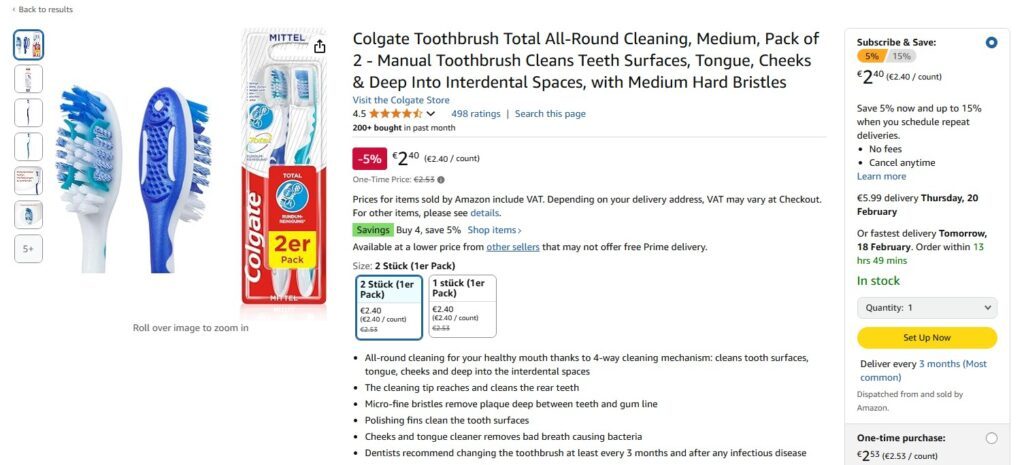
To improve your chances of winning the Buy Box, you need a Professional Seller account, competitive pricing, and full product availability. Amazon awards the Buy Box to the offers that are most favorable to customers, and it also rewards sellers who use FBA.
Look after your reviews and account health
On Amazon, reviews are currency. Positive reviews are key to success, so encourage customers to leave them using the Request a Review tool in Seller Central. Never buy fake reviews - and watch out for offers where someone reviews your product in exchange for receiving it for free. These violate Amazon's terms of service, since they can be seen as manipulation.
Also keep an eye on your Account Health, which Amazon assesses based on customer service quality, return rates, and product or service issues. Monitor your account health and react immediately if something goes wrong. Put the customer first.
Patience and persistence - the key to success on Amazon
Selling on Amazon is a marathon, not a sprint. It's also something of a rollercoaster. The early days can be tough - you may run into stiff competition, a slow start, return issues, product problems, and huge swings in sales. But consistent effort, careful analysis of your results, and gradual strategy optimization pay off over time.
Don't forget about the Polish Amazon marketplace!
One last thing - while many sellers focus on international markets, the Polish version of Amazon (amazon.pl) is a huge opportunity to reach local customers and get an early foothold in specific niches. Amazon.pl is growing quickly, and competition there is still lower than in Western markets. With FBA, you can easily sell in Poland while also reaching customers across Europe. It's also worth tailoring your product descriptions to Polish shoppers and investing in PPC ads in Polish. A strong local presence can become the foundation for your global success!
Summary
Starting to sell on Amazon is a challenge - there's a lot to pay attention to, and oversights can come back to bite you later - but it's also a huge opportunity, especially if you have a product with real potential. From choosing a fulfillment model, through legal compliance, to marketing and brand building - every element matters. Remember that success on Amazon takes knowledge, strategy, and continuous optimization.
If you feel like you need support, we're here for you! We help sellers get off the ground on Amazon - from setting up an account to compliance and scaling sales. Get in touch with us today and start building your success on Amazon with us!