Websites
Astro: The Future of Websites?
IKEA, NordVPN, OpenAI, Cloudflare - what do they have in common? They've all bet on Astro. You too can find plenty of benefits by building your website on Astro. Find out why this framework is changing how websites get built, and what that means for your business.

Most websites today are built on technologies designed for something else entirely. Frameworks like React or Next.js were created with complex applications in mind - and then ended up being used to build company sites, blogs, and content-driven websites. That mismatch is the root of a performance problem affecting hundreds of thousands of sites today.
Astro is a framework built on a different premise: most websites are content, not applications - and they should be built differently. It's used by IKEA, NordVPN, OpenAI, Porsche, and Cloudflare. In this article, we explain what it is, how it works, and why it matters for anyone with a company website or an online store.
The problem Astro solves
A typical company website today is either WordPress loaded with dozens of plugins, or a modern React-based framework that ships a massive bundle of JavaScript to the browser. Before the user sees any content, the browser has to download, parse, and run that code.
The effects are well documented: slow pages lose rankings on Google (speed is a direct ranking factor), see lower conversion rates, and drive users away - especially on mobile. According to Astro's own data, a site built with this framework loads on average 40% faster and ships 90% less JavaScript than the same site built in React.
If your site is slow, it's often not the server's fault, nor unoptimized images. It comes down to the architecture it was built on.
How does Astro work?
Zero JavaScript
Astro is built on one fundamental principle: by default, it ships zero JavaScript to the browser. Just plain HTML and CSS.
Sounds radical, but it makes sense. A menu, text, images, a product description - all of that can be static HTML. JavaScript only shows up where it's genuinely needed: a contact form, a cart, an interactive animation. As a result, the user's browser gets exactly as much as it needs - no more.
Islands Architecture - islands of interactivity
Astro introduced a concept called Islands Architecture. Picture a page as an ocean of calm, static HTML, with small islands of interactivity floating in it - the elements that genuinely need JavaScript.
The rest of the page is ready to display instantly. Interactive elements load separately, without blocking anything above them. What's more, you can mix different frameworks on the same page: React, Vue, Svelte. Each component can be written in a different technology, and Astro stitches it all together.
It's like a restaurant that brings out the table, chairs, and menu right away - and serves the hot dishes as soon as they're ready. The customer doesn't wait for everything at once.
Server-first, and visible to Google
Astro renders pages on the server. That means Google and other search engines see the page's full content immediately - with no need to run any JavaScript. This directly affects SEO and organic search results. If you want to learn more about how page speed affects visibility, read our article on how SEO drives success in e-commerce.
Newer versions of Astro extend this architecture with so-called Server Islands - dynamic elements rendered server-side (personalized content, prices, login states) without slowing down the rest of the page.
All of this means that websites built with Astro stand out from the competition - quite literally. They load in a fraction of a second, and the user doesn't have to wait for every element on the page to load - they get the full site right away.
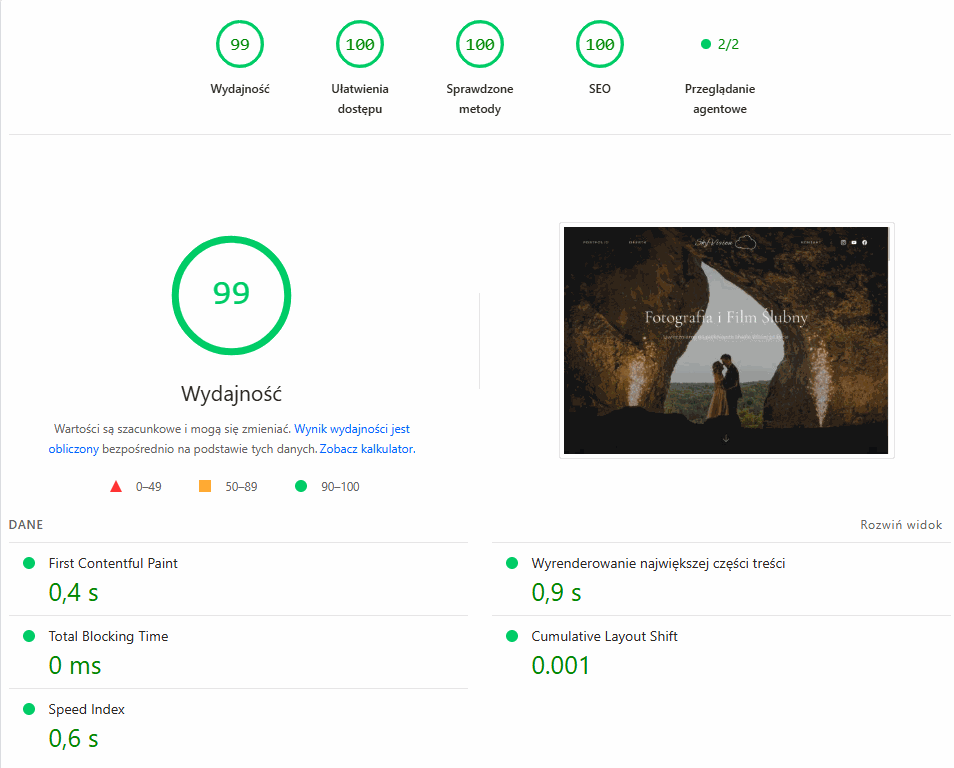
Who uses Astro? The market proof
Astro isn't a startup experiment. It's used by companies for which page speed is directly tied to revenue.
NordVPN
The Nord Security team responsible for NordVPN's websites faced a concrete problem: rapid company growth was creating performance issues on their pages, which was directly hurting sales. They had more than 20 languages, 10 currencies, and thousands of subpages. They tested Next.js, Preact, and SvelteKit. They chose Astro - the only framework that gave them full control over what gets sent to the browser, with no compromise between performance and functionality.
IKEA, Porsche, OpenAI, Unilever, Visa
These are brands whose websites handle millions of visits a day. IKEA and Porsche run extensive content sites with global catalogs. OpenAI - one of the fastest-growing services in the history of the internet - chose Astro for its developer-facing pages. None of these companies make technology decisions without thorough vetting.
Cloudflare
This is the most significant market signal. Cloudflare, one of the largest internet platforms in the world, had long used Astro for its own sites: developer documentation, its blog, landing pages, and Cloudflare Workers pages. In January 2026, it acquired the entire Astro Technology Company team and brought it into its own structure.
Astro remains open source under the MIT license with a public roadmap. But the Cloudflare acquisition means long-term support and integration with one of the most powerful internet infrastructures in the world. That's the answer to the question agencies and developers keep hearing: what if this framework doesn't exist a year from now?
Webflow Cloud and Wix Vibe
Two of the most popular no-code and low-code platforms chose Astro as the foundation for their clients' websites. When you build a project in Wix Vibe or deploy a site through Webflow Cloud, Astro is running under the hood, on Cloudflare's infrastructure.
When does Astro make sense - and when doesn't it?
When is Astro a good choice for building a website?
Astro works well anywhere a fast page with strong Core Web Vitals scores is the priority:
- new company websites, product pages, and corporate sites
- large content sites - blogs, knowledge bases, documentation
- sites integrated with a CMS (Contentful, Sanity, Storyblok)
- rebuilding an old WordPress site that's slow and hard to maintain
- any website where SEO is a key acquisition channel
What isn't Astro?
Worth stating plainly, because the narrative that Astro is only a landing-page tool isn't true - but there is a line Astro deliberately doesn't cross.
Astro is not an e-commerce platform. For building online stores, Shopify, Shoper, or WooCommerce are still a better fit; we'll have to wait for e-commerce solutions built on Astro. Nor is it a framework for complex web applications with user-side logic - React or Next.js have the edge there.
Astro is about speed - so how do you check your own site's speed?
You don't need to understand code to judge whether a site has a performance problem. Just go to pagespeed.web.dev, enter your site's address, and check the Core Web Vitals results - a free Google tool that measures exactly what matters for rankings and users.
If the results are poor, it's worth asking your developer or agency some direct questions: what is the site built on, how much JavaScript does it send to the browser, and was Astro considered as an option for the next project or rebrand?
Page speed isn't a technical issue - it's a business one. Every second of delay means less traffic from Google and lower conversion rates. Astro is designed specifically so that second doesn't get given away.
So if your site's speed is a concern, or you're planning a new website and want to know whether Astro makes sense for your situation, let's talk. At Sixteractive, we've been building with Astro for over a year, and we'd be glad to assess your situation. Click below or fill out the form: